
Harwood Unified Union School District · School Board
- From
- Ashley Woods, Chair, HUUSD Board (Warren) — accompanied by Vice Chair Cindy Senning and Supt. Dr. Mike Leichliter
- To
- Vermont House Education Committee (Chairman Conlon)
- Date
Vermont House Education Committee Testimony on 2024 Failed Budget March 14, 2024
Presented by Ashley Woods Board Chair Harwood Unified Union School Board
Chairman Conlon and distinguished members of the House Education Committee,
My name is Ashley Woods. I am a lifelong resident of Warren and I have the honor of serving as the chair of the Harwood Unified Union School District School Board. Additionally, my children attended our schools and my youngest is currently a senior at Harwood!
Accompanying me is Cindy Senning who is our board vice-chair from the Town of Duxbury and our district superintendent, Dr. Mike Leichliter.
Thank you for inviting me to speak before you today about the challenges our district faces related to our failed budget. I would like to spend my time by briefly giving you an overview of how our district as we know it today formed over the past sixty years, review some elements of our district articles of agreement that went into effect on July 1, 2017, and present to you some of the related challenges we now face as we look to reduce our budget for reconsideration by our voters.
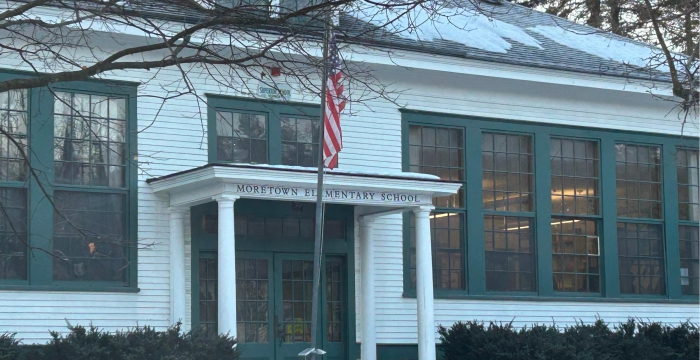
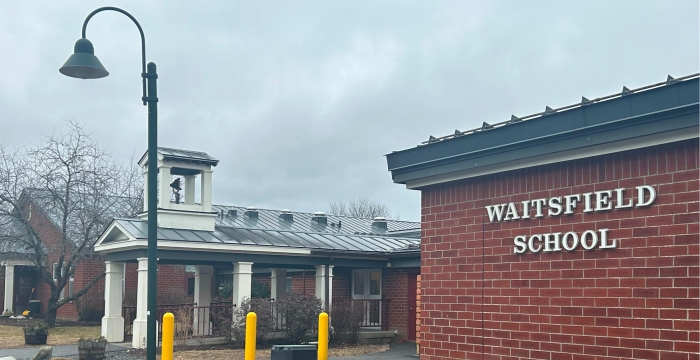
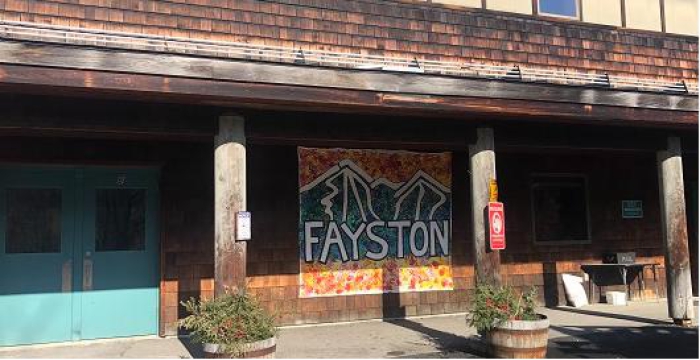
The Harwood Unified Union School District covers approximately 247 square miles and is comprised of the Towns of Waterbury, Duxbury, Moretown, Waitsfield, Fayston, and Warren. To those of you who know our communities, people generally think of us in terms of Waterbury/Duxbury and the Mad River Valley. I would like to point out that all of our six towns have a history of supporting public education and our local school budgets.
For those of you who are not familiar with our communities, if you drove route 100 from our northern boundary which borders Stowe, pass near Sugarbush and Mad River Glen Ski resorts before entering parts of the Green Mountain National Forest at our southern boundary which borders Granville, you will experience a gorgeous 45 minute drive that is quintessential Vermont!
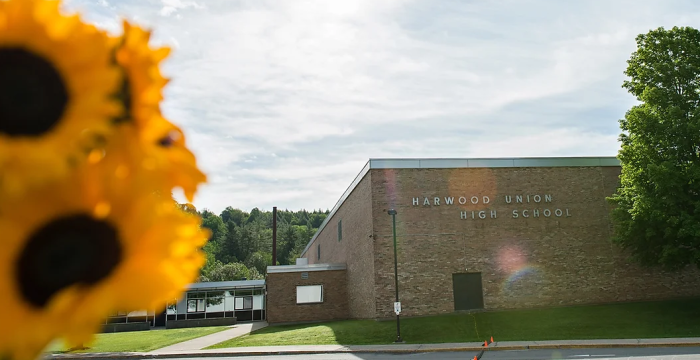
The first step towards unification in my mind occurred in the 1960s when we closed high schools in Waterbury and Waitsfield to build Harwood Union High School in South Duxbury. If you talk to some of our residents who lived through that period they will share that it was a bold move but not without its own challenges.
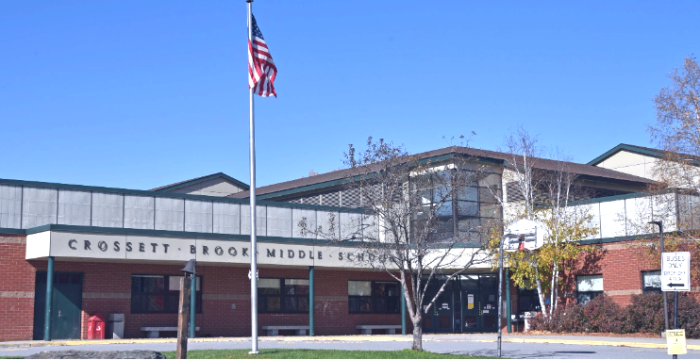
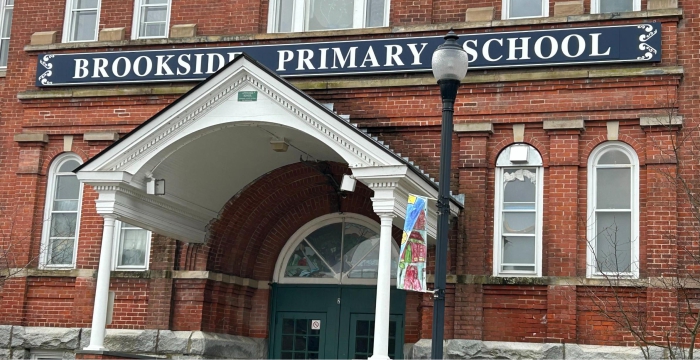
The next key event occurred in the 1990s when the Duxbury and Waterbury School Boards merged. Duxbury closed its elementary school, converted what is now Brookside Primary School in Waterbury to a K-4 school, and with approximately 50% state paid incentive funding for that merger, built Crossett Brook Middle School to serve students in grades 5 through 8. My colleague and friend Cindy Senning was on the Waterbury-Duxbury School Board at that time.
If we fast forward to 2017, our six towns and five school boards approved the articles of agreement under which we now operate as the Harwood Unified Union School Board. Many in our 6 towns were against this merger. Though we understood the whys, we worried about the loss of our schools' identities.
The previous six years since unification have been challenging for us as a community, state, and nation. We were in our third school year and still learning to function as a unified district when COVID shut down schools and ushered in a whole new set of complex challenges.
Since our budget failed last week we are hearing two common themes from our community members. That the "no" vote was cast as a protest to send a message to our legislatures that they need to fix the school funding formula. We are also hearing that the school board needs to "reduce staff or close schools to reduce our taxes." Mostly we are hearing from people desperate about their tax increases.
Regardless of the reasoning, let me share why reducing staff or closing schools are challenging tasks complicated by our grade configuration as well as the articles of agreement which included language to garner support for unification in 2017 among the voters.
We have a school board of 14 members with representation from each town. The vote for each board member is a percentage based on our town's population. As an example my vote is worth 7.2% while Cindy Sennings's vote counts for 5.2%.
During the first four years of operation, the unified district was not permitted to close any school within its boundaries. As of July 1, 2021 a building may be closed only with an affirmative vote of two-thirds of the school board along with a number of required public hearings.
If a school closes, children at that school "shall be afforded the option to attend the Unified District school closest to the place of residence unless parental choice indicates alternate preference." It is important to note that two of our four schools in the Mad River Valley are at capacity and would not have room to absorb a large number of additional children without an addition.
Now let me summarize the reasons why the two (2) budgets along with a bond to remodel Harwood Union Middle/High School failed since unification in 2017.
The first budget that failed was in March 2020 when the school board at that time proposed a grade realignment that would have moved some students from the Moretown Elementary School to Crossett Brook Middle School in order to reduce staff for two grade levels. There was also talk at that time of closing Fayston Elementary School. As soon as school closures were removed from the table, the budget passed.
The second budget that failed was last week. Most people who have talked to other board members and me state, "I support our schools but I don't know how I can afford a huge 20% to 30% increase that is being discussed in the news." I get it.
Additionally, a bond that would have remodeled Harwood as a high school only and increased capacity to Crossett Brook Middle School in order to realize personnel savings failed in November 2021. While there were a number of factors for that failed vote including the timing during COVID, most people I know will tell you that consolidation of two middle schools to one building in the northern tier of our school district was the primary reason.
We are a people business. As we look at making significant reductions to a budget that is 71% personnel, we are already shaving non-personnel costs that we know are not sustainable. People are the only place where a school district can experience greater budget reductions.
On the elementary level Brookside in Waterbury is our only school with multiple classrooms at the same grade level. Most of our other schools are smaller and only have one classroom per grade making it nearly impossible to reduce classrooms without either experiencing an inequitable imbalance of class size between schools or considering a realignment of schools and boundaries which has not proved to be an acceptable alternative for our community in the past.
While we can also reduce teachers and others like counselors, reading/math interventionists, and nurses who provide supportive services, there are legal and safety challenges in reducing those positions as well.
As a board we know that there are a number of difficult years ahead of us. Our concern is that if we cut too much too soon, we will not be able to meet our legal obligations to students. This board does not set tax rates or determine how the CLA impacts our tax rates. All we can control is the increase to our budget. It's important that we pass a budget that our community can afford but also important to propose a budget that can adequately fund our classrooms and the needs of our students while garnering the support of a majority of our residents.
Our school board understands the challenges the legislature faces and will continue to work together with your committee to find solutions for all Vermonters.
Thank you for your consideration of the difficult decisions we are currently facing.